
Spring in Manhattan (& Marlboro)

Spring in Manhattan (& Marlboro)

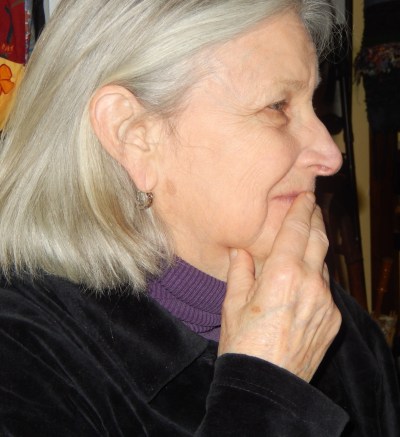
Connie Crosson (2015, Kelly Salasin)
My colleague & friend Connie Crosson (2015, Kelly Salasin)

I first met Connie in Chile at an international conference for the worldwide network of the Experiment in International Living. Geographically speaking, Connie and I were neighbors, but the lifestyles and topography of Manhattan and Marlboro were worlds apart–her island that never sleeps meets my mountain town and dirt roads without a traffic light in sight.

Santiago is where the conference took place. It was 2011. I was the Assistant to the Director of Federation EIL. Connie served as our United Nations representative. This immediately lent her my affection. (I’d had a thing for the UN since I was a kid.)

Connie didn’t make it to the conference the following year in Japan or to the one after that in Vermont, and I didn’t make it to Ireland, and neither of us was in New Zealand, but our friendship, seeded in Santiago, deepened into a seasonal rhythm that presenced itself each March around the annual Commission on the Status of Women (CSW.)

“Expect chaos,” Connie wrote, when I first inquired about how to navigate the event.

Thousands of NGO representatives–mostly women–from around the world convened each year at the United Nations; which I found so thrilling, that I kept returning. Each time Connie encouraged me and we shaped plans to get together.

That first year, we met up between meetings, and later in the week for lunch, and on the last evening, Connie invited all the representatives from our organization to her home in the Upper West. She cooked. We brought salads and desserts and wine.

This ritual of connection continued year after year. One March, Connie and I caught up for lunch at the American Wing at the MET. Another time at Pain Le Quotodien on 2nd Avenue; while last year, a bunch of us gathered back at her home for dinner after the day’s events. Connie cooked then too. We provided the accessories again. Everyone stayed late into the night.
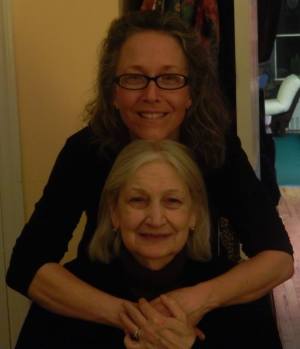
Our last time together. March 2015.

In the kitchen, Connie told me that she hadn’t made it to any of the meetings; that she’d been at the doctor’s. She shook her head as if to say: Things don’t look so good. I hugged her more earnestly that night.

When I returned to New York a year later for the 60th Commission on the Status of Women, I saw Connie everywhere. In the park. At the MET. At Pain Le Quotodien. At the United Nations. At the Church Center across the street.

I’ve been home from the city for about a week, settling back into the rhythms of my dirt road, and now is about the time when she and I would exchange a volley of emails about the results of the Commission–where there was hope and where there was frustration–and Connie would invariably include a photo or two of spring in New York… a flowering tree perhaps, or a set of bulbs pushing through the ground in Central Park–to serve as an encouragement–to both of us–at the end of a long, cold winter.

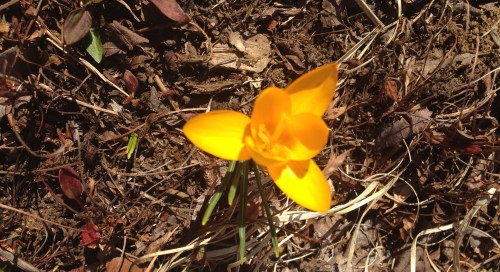
This year, spring has come early to both Manhattan and Marlboro.

Look Connie… even in my backyard…
IMG_2656

A former member of the US Committee for UNICEF, Connie Crosson served as the UN Representative for The Federation of the Experiment in International Living from 2008 until her death in 2015.  Connie was a graduate of the School for International Training (SIT) at World Learning, a mother of an Experimenter to Germany, a host for many other Experimenters from around the world, and the director of a management training and consulting firm for nonprofit organizations.
 

The World Comes to Me

The World Comes to Me

vermont, world, UN Women

Twenty-three years ago, I took a big pay cut and moved to Vermont. Another year later, I surrendered that income to invest myself in motherhood–because unlike work and success and travel, motherhood hadn’t come easy to me.

As a stay at home mom, I couldn’t afford to go out for coffee. I’m not exaggerating. My husband was a new teacher, and we had to pay for insurance out of pocket, and the cost of living in Vermont was surprisingly higher than New Jersey. I had a college degree and 8 years in the classroom; prefaced by a handful of years managing a restaurant; but I felt compelled to give my all to motherhood just as I had to the endeavors that came before it.

More than a decade passed before I let some other interests back in. My sons no longer needed me in the hour to the hour, but I was terrified of awakening passion for something other than them. I played it safe, in part-time roles, and little by little my sense of a separate self began to re-emerge.

More than anything, I longed to travel–to know myself in some foreign place again–but another decade passed before I left the country; unless you count crossing the border of Vermont into Canada; which admittedly was a huge thrill–all three times.

I was approaching 50 when I was offered another safe, part-time position, in a tiny rural office. I almost fell out of the interview chair, however, when I was asked if I had a valid passport. 5 months later, I was in Chile. The following year, Japan.

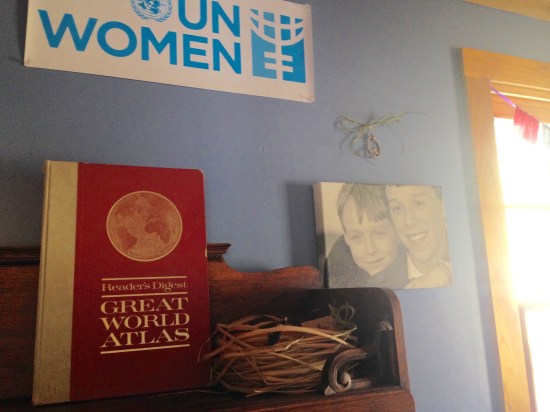
Surprisingly, it was my stay-at-home grandmothers who planted the seed of travel in me. As a girl, I sat at my great-grandmother Mildred’s knee, and watched as she brushed her hand across the cover of her huge atlas, turning page after page, as she pointed–to all the places she had traveled with her husband after his retirement as a Merchant Marine.

Her daughter, my grandmother Lila, dreamed of leaving home and working internationally. She confided this while helping me with my French, after I told her about the thrill of a school field trip to the United Nations.

“I wanted to be a translator,” she said.

Work. Motherhood. Travel.
Passion. Devotion. Choices.
Losses. Realizations.

I’m 52 now, and I’ve given up that traveling job for something else.

During my years at home, I discovered what a wise woman once said:

Our true passion brings us balance.

Even though I did it so well, and gave it my all–managing a restaurant and a classroom and a home and a non-profit, none of these were my passion.

I was the last to realize my own.

Others called me a writer first.

For the past few years, I’ve dedicated myself to the page. I can afford a cup of coffee now, even lattes, lots of them, but not much else. My husband is still a teacher and we still have one son at home. The other is abroad, living the life I once knew.

I’ve begun to miss the world.

Once a year it comes to me.

(The 60th Commission on the Status of Women at the United Nations; click here)

A Village, Its School, Its Community

A Village, Its School, Its Community

(This is part of a series dedicated to our  local elementary school–the heart of our community–on the occasion of my last child’s graduation… count down–two weeks!)

Caroling, another Marlboro Elementary Tradition 2014, Junior High, Whetstone Inn

As an army brat and the oldest of eight children, I’ve seen my share of school performances–in places near and far.

Add to that the decades as an elementary teacher and you could say I’m a school concert officianando. (Lucky me!)

And just in case your experience is more limited than mine,  I’m here to let you know that Marlboro Elementary School (MES) events are by far the cream of the crop.

I saw my first MES performance in 1994 at Marlboro College, and felt the first quickening of my first born right in the Whittemore Theatre, aisle three, center left.

A handful of years later, that same child was on the stage exposing his belly to the audience in a kindergarten performance that was well past his bedtime.

The following year, he was in the “orchestra” sounding percussion for his class play beside his best buddy.  After watching the sword dance, Timmy leaned over and whispered to Lloyd: “How will we EVER do that?!”

A couple feet later with deepening vocal fluctuations, there they are, teenagers, dancing in the dark, with glowing sticks.

If Marlboro’s Holiday Concert isn’t your idea of a fun night out, it might help to look at it through the eyes of an anthropologist.  The rites of passage steeped in the curriculum that music teacher Charlene Morse offers, matches that of those tight knit cultures we admire.

From the enthusiastic participation of the primary room to the grumbling of the junior high, it’s all good–the stuff of coming of age in a strong community. The Youngers look up to  the Olders, and the Olders look up to the Alumni–who voluntarily return to the place they once couldn’t wait to leave.

There is Joseph, a Marine, standing on the stairs beside his fifth-grade teacher, David Holzapfel.
His brother Jesse is back on the stage playing drums.
There is Harry speaking to the audience–channeling the love of our community–to MES graduate Jesse Lopata at Dartmouth Hitchcock.
There is baby Chloe toddling now and there is baby Dylan, speaking!

Families who haven’t seen each other since summer days at South Pond reconnect, sharing snow and power-outage woes with continued offers of help.

Recent MES graduates linger in the lobby and the whole Reichsman family traipses by with equipment in their arms.

Winter is upon us and once again the pot of our community is stirred.

(Kelly Salasin, December 23, 2008)

country mouse, part V, communion

country mouse, part V, communion

59th Commission on the Status of Women, International Women’s Day Parade, Beijing +20, photo: Kelly Salasin

I arrived in the city engulfed by the enormity of the population here, feeling both crowded and alone, intruded upon and abandoned; but over the course of 7 days, I began to notice patterns beneath the surface of chaos…

In the way one woman’s thigh comfortably flanked mine in the subway car.

How we could each let our guard when other women were beside us.

The framed Maya Angelo poem on the wall of the subway car.  The Courtesy Guidelines chiding “man sprawl.” The Sexual and Inappropriate Touch warnings.

The kind voice of the driver over the loud speaker, welcoming visitors, students, residents and indicating which stop we were approaching and which one was to come.

The sense of collective relief when a handful of passengers made it through the doors just before the train departed again.

How we all ignored the man with the atrocious cough, and the other one who attempted to speak to each of us as he stumbled through the car.

The pause of the elderly woman to thank me when I put out an arm to help her to her feet.

The circle of officers chatting on the platform.

The laughter and awe of a crowd circling a performance of dance at the station.

How quickly the Shuttle, the Downtown, the Uptown, the 6, the 1, became familiars.

The constant deluge of billboards on walls, and stairs, and subway cars advertising the latest play or upcoming television series that I desperately wanted to see simply to resolve the pressure.

How I rushed like the rest of them, even though I was in no hurry.

How I wished I was a smoker, not for nicotine, but for the reminder to breathe in and breathe out, breathe in and breathe out.

Stopping to help a foreigner purchase a subway ticket.

The searching smiles of other passerbys. The ecstatic traveler.

All those unplugged, and all those talking to themselves, with and without, wires.

Pointing the direction to Central Park.

The new baby at the cafe. The new baby on the subway car. The new baby in her father’s arms.

Lovers. School groups. Tour guides. Families.

Two different women who told me not to park there because if I didn’t get a ticket for the fire hydrant, I’d get a ticket for being on the wrong side.

The man on the stoop who told me that the sign about “No Standing” confused him too.

In this clashing culture of crowds and singularity, there was so much separation, yet there was also communion, and it was abiding and filled with the absence and presence of love.

(This is the last in a series of posts from a week in the city: Part I, Part II, Part III, Part IV.)

country mouse, part III, street parking success!

country mouse, part III, street parking success!

(Part III of a week in the “city” for CSW59)
dont_even_think1

One last day of street parking–without a ticket or a tow (albeit tons of tension)–and we made it!

Not only that, but for a moment, we were in the tribe…

On our last opposite-side parking adventure, we found a spot almost too good to be true; but then we spotted it… another fire hydrant. (You don’t realize how many hydrants there are until you try to street park.)

We pulled in anyway, thinking/hoping we were far enough away; which was impossible to ascertain given that the markings on the curb were buried in ice and snow. But then another car pulled in front of us, and another car in front of him, and we figured we had to be safe.

When we first considered opposite side parking, my naiveté led me to miscalculate just how many times we’d have to relocate the car. Twice a week, I thought, that’s not too bad. But what I hadn’t figured was the exponential effect of both sides having the twice a week bans.

It wasn’t until the last morning that we noticed how the city folks strategized this equation when we realized that each parked car had a driver in it.

People apparently doubled parked until the street sweeper passed and then pulled back into their spots and waited inside their cars until the 90 minute parking ban was complete.

(Worth noting: the “street sweeper” this time of year is a guy with a shovel or jack hammer or miniature front loader, and plenty of potential parking spots require 4 wheel drive to climb atop the frozen mounds of snow.)

A moment later, a man dressed in a chef’s apron got out of the car closest to the hydrant and proceeded to knock on each of our windows, asking if we’d move back a bit. We all happily complied, even the woman behind us, who had been napping beside her small white dog.

It’s these tiny moments of tenderness that astound me in a city that appears tough and insular. The man in the apron smiled his appreciation and got back into his car as we all waited out the minutes, together.

At the stroke of 10:00 am, a string of car doors opened.

There were no greetings, or smiles, but there was a palpable sense of communion in our footsteps.

(click here for: country mouse, part I AND country mouse, part II.)