
What is Richard doing?

What is Richard doing?

In the days and weeks following the Co-op tragedy, I’ve wondered, What is Richard doing?

I’ve never been imprisoned or even spent a night in jail so I have a hard time imagining how Richard’s hours are shaped–beyond the stark horror of his act.

How does he sit there, day after day, staring at such devastation? How does he read a book or write a letter or take a breath–apart from it?

Does the murder hit him like icy water when he wakes each morning?

Is the pain as sharp as it is for Michael Martin’s wife?

How does Richard find permission to move on?

What does he say to his wife when she visits?

How about his mother?

His best friend?

His co-workers?

Other prisoners?

“I shot my boss in the head.”

What do they say in return?

Does he make friends? Does he try something new? Does he begin to heal despite the never-ending pain of his crime?

Over two months have passed since Richard entered the Co-op that Tuesday morning with a gun.

How is everyone else doing now that the shock has worn off?

Does the icy water of remembrance hit you in the face from time to time too? Like when you’re standing outside of  Sam’s flood sale on Flat Street and glance across the brook to see the Co-op’s loading dock? Or when you’re pushing your cart toward the yogurt and have to pass the opening for the back offices?

Two months.

What is Richard doing?

Should I care?

Do I have a right to?

Kelly Salasin, Marlboro, VT
to read more about the BFC Tragedy, click here

Feeling Worse about Feeling Better

Feeling Worse about Feeling Better

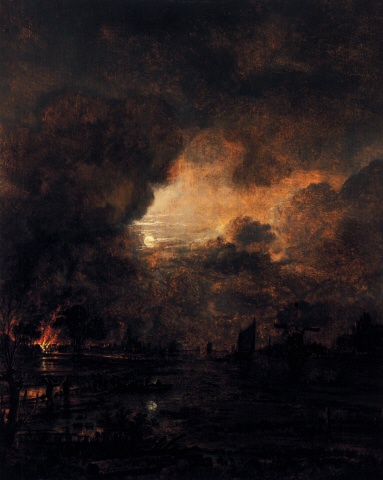
Neer, detail, visipix.com

Almost two weeks has passed since the tragedy that took place in our community Co-op, and I hate to admit this, but I’ve grown accustomed to it. Grief continues to arrive in waves, but with the tide of the news receded, it no longer floods my days.

It feels good to be relieved of the burden of shock, but is that truly a good thing? Is surrendering to murder akin to accepting it, to tolerating it, to allowing it to become a norm?

I know that I cannot go through my days somber and distraught, but how can I shop in my grocery store without feeling the bloodshed spilled there? Won’t I be dishonoring the man whose life was stolen when I talk to friends in the aisles as if it never happened?

I’ve only been back to the Co-op once since the shooting, and since I’m going out of town again this week, I can put off returning until September.

Is that a good thing?

Will I ever feel the same about my Co-op? Do I want to?

How do I reconcile feeling better when Michael Martin’s family grieves forever?

It’s not just the Co-op that’s tainted from this murder. My own community of Marlboro is too. Last night I stood under the stars with friends at an annual summer party, but I couldn’t get our neighbor, Richard Gagnon, out of my head.

When I pulled into the pond this morning for brunch, I cringed at the thought of the tennis courts where Richard played with his wife; and later that afternoon, I cringed again, when I thought I saw him walking across the beach with two friends.

Am I afraid of Richard? Of someone like Richard? Or am I simply traumatized by the fact that someone among us carried out such an act? That someone else could?

For the first time ever, murder is a topic at our family dinner table. “Are you talking about Richard?” My eleven year old asks. “No,” I reply. “We’re talking about the other murder.”

The other murder.

How is that phrase spoken in our home?  That we can talk about it at all feels good, because until now it hurt too much to admit that it had crept into our world.

Maybe that is why we all walk down the aisles of the grocery store, or gather at the pond, or under the stars without saying much about the crushing loss we must accept if we are to endure.

Kelly Salasin, August 21, 2011

For more on the BFC Tragedy, click here.

A poem for Michael Martin

A poem for Michael Martin

Last night I attended a benefit concert, thinking that cello and piano and poetry would soothe my weary soul from the events of the past month–from my son’s diving accident, to my best friend’s car accident, to the tragedy in Brattleboro.

I had been writing incessantly for over a week since the shooting at the Co-op, and with my latest post, I felt that I might be finished.  Instead, I found my anguish stirred rather than soothed by last night’s performance, particularly when the poetry of the Romanian poet Eminescu was read.

detail, Dore, visipix.com

Unto the Star

‘Tis such a long way to the star
Rising above our shore
It took its light to come so far
Thousands of years and more.

It may have long died on its way
Into the distant blue
And only now appears its ray
To shine for us as true.

We see its icon slowly rise
And climb the canopy;
It lived when still unknown to eyes,
We see what ceased to be.

And so it is when yearning love
Dies into depth of night:
Extinct its flame, still glows above
And haunts us with its light.

~Mihai Eminescu (1850-1889)/translated by Adrian Sahlean

Kelly Salasin, August 20, 2011

(To see the full collection of posts and comments on BFC Tragedy, click here.)

Which Wolf?

Which Wolf?

Yesterday I wrote about justice, wondering what restitution looks like for murder. Today, I’m pondering what restitution we each owe in response to this tragedy.

One reader asked something that I’d been thinking about ever since I heard the motive behind the Brattleboro Food Co-op killing:

 Where was the open dialogue within the coop to air grievances among the staff?

This same reader asked another question that I think many of us have pondered:

What must have been happening to him cumulatively that created this last straw?

This brought to mind our responsibility to each other and to ourselves–which is illuminated by this well-known Native American tale:

Two Wolves

(open clip art. com)

One evening an old Cherokee told his grandson about a battle that goes on inside all people. He said, ‘My son, the battle is between two ‘wolves’ inside us all.

One is Evil. It is anger, envy, jealousy, sorrow, regret, greed, arrogance, self-pity, guilt, resentment, inferiority, lies, false pride, superiority, and ego.

The other is Good. It is joy, peace, love, hope, serenity, humility, kindness, benevolence, empathy, generosity, truth, compassion and faith.’

The grandson thought about it for a minute and then asked his grandfather: ‘Which wolf wins?’

The old Cherokee simply replied, ‘The one you feed.’

~

Kelly Salasin, August 15, 2011

To read more about the BFC Tragedy, click here.

JUSTICE

JUSTICE

After five days, I find myself hating Richard for what he has inflicted upon us. I can’t imagine what the family and friends of Michael Martin feel.

If justice was ours, how might we enact it? I scan my brain, seeking appropriate acts of restitution, but can find none for a life taken.

I think back to a lecture given in Marlboro by the author Kim John Payne. Though the focus was on education, Kim shared a story about the Maori tribe in his native New Zealand, telling us how they creatively responded to crime and punishment.

Rather than lock two young men behind bars for stealing a car, the men had to face the victim of their crime–a single mother, who was unable to get to work or attend school due to the loss. Alternately, the “court” of community members heard the stories of these two young men, how their lives led to the crime, and how it affected them.

Each party–the young men and the single mother–had someone from the community, beside them–not so much to speak, but to support. Others spoke too, on behalf of both, and the “trial” went on for hours as they did.

In the end, the local grocer stood up and offered these two men work so that they could afford to repay the woman for the hours she lost at work and to pay for her transportation to school while her car was being repaired.  Additionally, the local mechanic offered his services so that only the parts would be charged.

There were more voices in this story, and I may have mistaken some of the details, but what I remember most was what happened after the “trial.” The men were asked to stand on what might be a town green, and the community members each circled past them offering praise for their restitution. No one spat or cursed or otherwise separated these men from the community in which they belonged.

How would the Maori deal with murder, I wonder?  What acts of restitution would arise from the mouths of the community?  For surely Richard, despite his abhorrent act, still belongs.

Kelly Salasin, August 14, 2011

for more on the Brattleboro Co-op Tragedy, click here