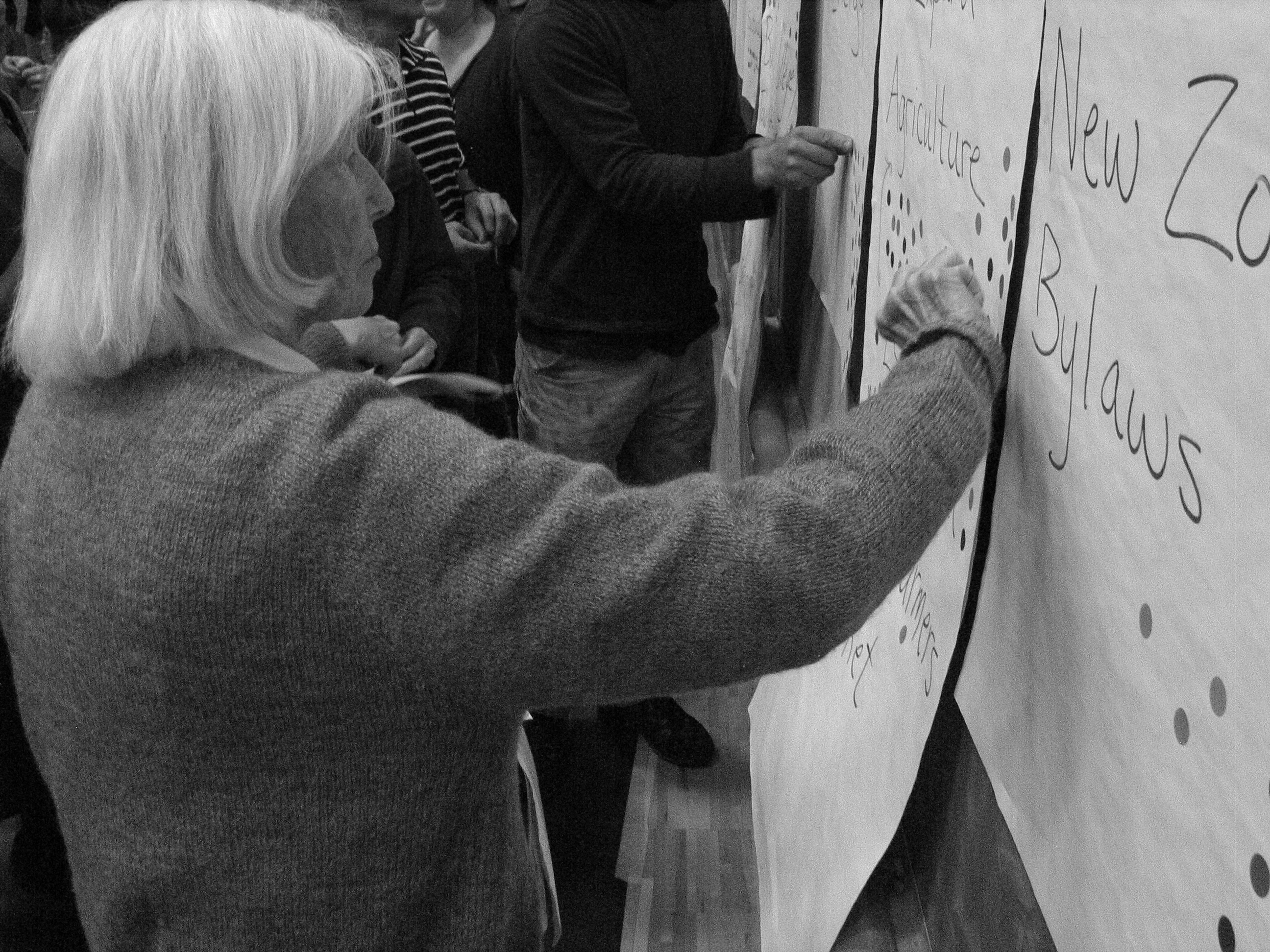
Marlboro Outback 6:30 – 9:00 PMMarlboro Resident Polly Wilson votes at the Marlboro's Community Meeting (photo credit David Holzapfel)
This is a great opportunity to be part of the future planning for the town.
PLEASE COME TO BE A PART OF WHAT’S NEXT!
AND BRING A FRIEND OR NEIGHBOR WHO MAYBE MISSED THE FIRST 2 MEETINGS.
To Residents of Marlboro, Vermont
Come to the next meeting in the Community Visit process on Monday, May 24th from 6:30 to 9:00 at the Marlboro Elementary School. We’ll be looking at these 3 priorities:
– Develop a Marlboro Community Center Building
– Improve Walk-ability and Expand Bike & Walking Paths
– Generate Energy (Note that a meeting around the topic to “Advance New Zoning Bylaws to Include All Species” will be organized by VCRD and the Marlboro Planning Commission this coming fall)
VCRD will bring a new “Visiting Team” of state, federal, regional and non-profit leaders to Marlboro to develop task force work plans with action steps and resource lists that will help the town move forward.
Forrest Holzapfel, Marlboro Community Visit Chair
Paul Costello, VCRD Executive Director
Here’s some background and more detail:
On April 29th over 100 Marlboro residents gathered in a community meeting to consider the ideas that were discussed through the Marlboro Community Visit process and to set priorities for action.
At the meeting, the Vermont Council on Rural Development (VCRD) presented a list of all the key directions that residents had put on the table at the public forums on March 25th.
Following discussion, the top 2 priorities from the vote that night are those listed above. Community members also identified 2 ongoing priorities that need some fresh energy and they are also listed.
“A vision without a plan is just a dream. A plan without a vision is just drudgery. But a vision with a plan can change the world.” (Proverb)
"Dot Party" The Town Votes/photo credit: David Holzapfel
“We shape our buildings, then our buildings shape us.”
— Winston Churchill
Marlboro Priorities: Develop a Marlboro Community Center Building Residents could create a stronger sense of Marlboro and improve the connections with others in the community by building or adapting a facility to serve as a unifying Marlboro Community Center. Features of such a center could include programs and activities ranging from meeting rooms and senior services to a gym, tourist information and WiFi center, library and reading room, entertainment space, parent/children playgroup room, community kitchen, teen center, café, or even a pub. Provision for parking and connection by trails to neighborhoods, the college, and other center points will be crucial to success. A Community Center Task Force could evaluate existing buildings and opportunities (like the Skyline Restaurant) and work with other groups in town to design a structure for multiple community activities, from country dances to social service meetings, movies or senior meals.
Michelle speaks to the viability of Skyline, photo credit: David Holzapfel
Task Force Signups So Far: Sally Andrews
Augusta Bartlett
Lauren Beigel
Fred Bisbee
Alan Dater
Casey Deane
Esther Fielding
Will and Paula Fielding
Lucy Gratwick
Mary Greene
Marcia Hamilton
Richard Hamilton
Michelle Holzapfel
Francie Marbury
Andrea Matthews
Jean Boardman addresses the room/photo credit: David Holzapfel
Peter Mauss
Ellen McCulloch-Lovell
Lisa Merton
Ed Metcalfe
Julianne Mills
Lauren Poster
Mike Purcell
Kelly Salasin
Ede Thomas
Peggy Tiffany
Felicia Tober
Allison Turner
Liz Vick
Wendy Webber
Improve Walk-ability and Expand Bike and Walking Paths Bike and walking paths can contribute to community interconnection, public health and community sustainability. A multi-use path from the school to the Town Offices, for example, could lessen the need for short car trips. A committee of Marlboro residents could look at the model developed by Kingdom Trails in the Northeast Kingdom for biking, walking and ski trails either for in-town personal transportation or to develop recreational assets for tourists and residents alike. The task force could map existing trails at the college and other community center-points, link them, map them, and encourage their use as ways to get around town, get exercise, and lower the number of regular car trips.
Task Force Signups So Far: Gail MacArthur
Julianne Mills
Barbara Parker
Mike Purcell
Vanessa Redfield
Brent Seabrook
Peggy Tiffany
Liz Vick
*****
In addition, Marlboro residents wanted to strengthen two existing efforts by bringing in new volunteers and building momentum to:
Generate Energy Marlboro’s well established Energy Committee has led significant efforts to expand efficiencies in buildings throughout the community. But more mutual public education is needed to expand efficiencies and to inform the public about the potentials to cost effectively produce energy. Marlboro should adopt a vision to make itself the “Distributed Energy Capitol of Vermont” and then implement it by systematically expanding the number of households, businesses, and public buildings that generate the power that they use and contribute to the community’s energy needs. Toward that end, Marlboro residents should: explore the implementation of a local PACE program (Property Assessed Clean Energy) to support residents’ decisions to advance energy and efficiency projects; explore possibilities to build micro hydro sites in the town’s watersheds, evaluate the potential for a community wind project or extensive small scale wind development, and systematically expand solar panels to near ubiquity on houses in the community. Residents would like to see a Task Force raise the flag around a Marlboro identity as a state leader in energy creation and sustainability.
The Youngest Attendee (photo: David Holzapfel)
Task Force Signups So Far: Peter Mauss
Jonathan Morse
Rose Watson
Advance New Zoning By-Laws to Include All Species A meeting to move this priority forward will be organized by VCRD and the planning commission this coming fall and so won’t be on the agenda on the 24th.
Marlboro has an opportunity to plan for and build zoning to support long term strategic goals of creating a village district and advancing conservation. Marlboro should adjust its town plan over time and develop new zoning ordinances to protect moose and bear corridors, to focus development density in a village area yet to be designed, and to preserve the rural nature of the town. Residents suggest that those working on this should consider density development on RT 9 and between RT 9 and the College as potential village center. Some suggest defining a limited area for commercial development on Route 9, and place for senior housing and for affordable housing for young families as part of focused development to build the village center.
Note: If you can’t make it Monday evening, you can follow the meeting LIVE on Twitter with the hashtag #VCRD or follow @kellysalasin. Or you can return to this blog and follow the LIVE Twitter feed on the side bar or check back for the complete highlight post afterward.
Kubler-Ross could not have imagined the grief over the inaccessibility of high speed internet in rural Vermont so she neglected to include the steps after Acceptance which are the ones I’m needing right now.
Following her landmark work on grief, two more stages have been slipped in by others: shock and testing.
But I’ve already done TESTING. I secretly glance up at the airport bar on my laptop every once and awhile on the off chance that I can catch myself already connected.
The other step, I’m saving. I’m saving SHOCK for the day when I actually have those grey bars filled in with black–from my own livingroom!
For now, I’m stuck in the VOID. Because the only other option is to cycle back through the steps–and I refuse to do that, no matter what Kubler-Ross says.
I’m sitting down on theses STEPS and waiting–practicing my best SHOCKed face so that the moment that WIFI arrives, it won’t know that what I really want to say is:
“All that summer Miss Rumphius, her pockets full of seeds, wandered over fields and headlands, sowing lupine seeds. She scattered seeds along the highways and down the country lanes. She flung handfuls of them around the schoolhouse and the back of the church. She tossed them into hollows and along stone walls…” (an excerpt from Miss Rumphius by Barbara Cooney)
~
If you are familiar with the story of Miss Rumphius, you might suspect that such a person lives among us in the Deerfield Valley. For a special someone must be tending to all the beautiful flowers about our town–the whites and pinks and purples that trail over the bridge and pour out of window boxes along Main Street, the lush geraniums and petunias bursting out of barrels in front of restaurants and shops.
Downtown Wilmington
Perhaps you’ve caught her, as I have, in the act of watering or planting or clipping. Maybe you’ve spotted her digging in the dirt at the cemetery on Stowe Hill at the end of the day. Or perhaps you’ve passed her, arms full of buckets and gardening tools, in front of Memorial Hall just as you were getting your first cup of coffee. Some days she seems to be everywhere… the Kreemee, Grand Union, the tennis courts and all along Route 100. Other days she can’t be found.
But she is there, somewhere, at work in her gardens. For she is The Flower Lady, and each one of those barrels and boxes and pots you see is a tiny garden that she has created.
Gardens, scholars say, are the first sign of commitment to a community. When people plant… they are saying, let’s stay here. And by their connection to the land, they are connected to one another. – Anne Raver
Mary Pike-Sprenger (aka. The FLower Lady) grew up on Shafter Street back in the days when Wilmington was a very popular summer resort:
“There was a whole different air to the town then. Visitors would come up from the city or Connecticut and stay for months. It was mostly older people, and they would sit and rock in these beautiful rocking chairs on the porch at Crafts Inn. In the evenings, they’d stroll around town and they’d always come down our street which wasn’t so commercial then.”
Mary’s grandmother, Meda Crafts, lived with Mary’s family, and she would start their garden every spring. Mrs. Crafts was friendly with the summer visitors who’d stop to admire her work.
“It was a wonderful garden,” recalls Mary fondly, “with these beautiful, vibrant blue delphiniums, orange oriental poppies, pink lupines… and a meticulously maintained white picket fence.”
Mary’s father, Gordon Pike, was a carpenter, and he built that fence himself. “It was handmade, piece by piece, gate by gate,” boasts Mary.
“We had a beautiful arbor with climbing roses over the top, and bird baths, and beds of daffodils… and I remember lots of wild yellow roses, and a lilly bed! My mother and grandmother did most of the planting and maintaining, but my brothers and my sister and I were expected to help out. (Have you ever dug up an iris bed?!) We did do a lot of complaining about the chores, but the garden was a real labor of love by all of us.”
The love of gardening is a seed that once sown never dies. – Gertrude Jekyll
“‘You must do something to make the world more beautiful,” said her grand father. ‘All right,’ said Alice. But she did not know what that could be.” (an excerpt from Miss Rumphius.)
~
It’s no surprise that the Pike children grew up to love gardening. Both Mary and her sister Melanie Boyd made it a large part of their lives as did their mother and grandmother before them. Melanie was the first to be hired by the town to plant and maintain flowers, while Mary began doing gardening work for the Red Mill where she works as a waitress. (Both sisters also work full-time as teachers.)
Later Melanie’s interests took a different turn and she began to focus mainly on private accounts, including gardening with Tasha Tudor. It was at that time that Mary took over the town job.
“My girls Tyne and Brie were very young and this type of work made it possible for me to be a mom, to be home a lot, or bring them along to help. We all love being outdoors too,“ says Mary.
“My days were shorter then, but things grew over the years. It was a phone call here, a phone call there or people would just see me working and ask if I could come take a look at their flowers. No matter how busy I was, I always seemed to say ’Yes’, but now I do have to think more about it because the job’s grown so much.”
As the Garden grows, so does the Gardener.
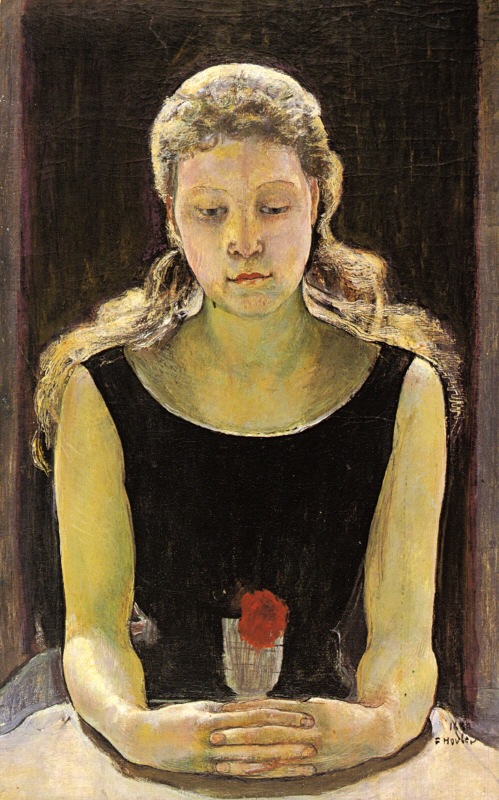
Hyre, detail (visipix.com)
She started a little garden among the rocks that surrounded her house, and she planted a few flower seeds in the stony ground. Miss Rumphius was ‘almost’ perfectly happy. “But there is still one more thing I have to do,” she said. “I have to make the world more beautiful. (an excerpt from Miss Rumphius)
~
What was once a flexible part-time job has in twelve seasons blossomed into a very demanding full-time job for Mary, especially during the late spring and early fall when she is still teaching.
Mary starts her work each year in March and usually wraps things up Columbus Day weekend. In early spring, she begins her rounds at each of the planting sites, checking on the condition of the soil and the planters and determining what needs replacement.
Mary also takes a trip to her wholesalers in New Hampshire, Massachusetts and Vermont to check on quantities and make sure “the colors” are just right (she has some horror stories to tell!)
By Memorial Day or the first week of June (depending on frost predictions and the eagerness of her clients,) Mary is in a planting frenzy, having to put in well over 2,000 plants at fifteen different sites in the period of one week.
After that, she can take a deep exhale, until the end of the month, when she begins to worry that her flowers aren’t growing fast enough. By July though, things are lush and beautiful, and she focuses on watering, watering, watering (and feeding… she feeds her plants every time she waters!)
During the summer months, Mary is up at dawn, making sure she gets to each of her sites by the end of the day, doing half the accounts one day, and the remaining accounts the next.
Before the end of the summer, she’ll talk with each of her customers to see what, if any, changes need to be made for the following season. And in the fall, she’ll be back in the dirt, digging up plants, and getting ready for winter.
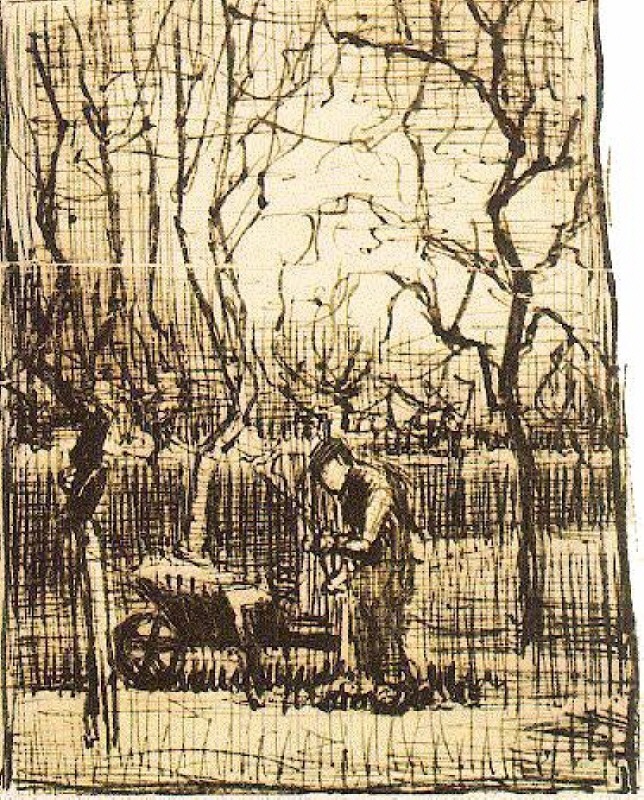
Van Gogh/detail (visipix.com)
The most noteworthy thing about gardeners is that they are always optimistic, always enterprising, and never satisfied. They always look forward to doing something better than they have ever done before. – Vita Sackville-West
“It’s very important to me that the flowers look nice for the community, and I take it very personally if they don’t,” says Mary about her choice of flowers for the town.
“I need something that people are going to be able to see when they’re driving through town at forty-miles an hour. My idea is that less variety of color has more impact. I use the huge geraniums and Grandiflora petunias. While a smaller, perhaps more interesting plant, would be nice, you’re not going to see it unless you’re walking up to it. Driving by, it would just look like a bunch of green. I also need to make sure I use a plant that is hardy and weather resistant, and that can take the dust from the road, from all the cars and tractor trailers. Delicate plants very often aren’t able to survive, they’re choked.”
Something else that Mary had to learn through a lot of trial and error was to cut back the plants. “Sometimes, people will come up to me with a look of horror in their eyes when they see me ripping and tearing out huge arms of petunias,” she recalls.
“I used to think that as long as I had a lot of flowering plants in my barrels at the right time, it was wonderful. And then one day I drove by the Kreemee and saw a whole lot of white and not much red… the petunias had taken over! German ivy will do that too. Now all my plants get haircuts.”
The best fertilizer is the gardener’s shadow.
It’s no doubt that the attention Mary gives to the flowers in town accounts for much of their beauty, and many take notice. “When people think of Wilmington in the summer, they think of the flowers, and I guess I’m a little surprised at how important it is to them,” she shares. “People will often come up to me and say,
‘Are you the Flower Lady?’
‘Are you the one that keeps all these flowers looking so beautiful?’
‘Do you just do this for fun?’
I think they must have this image of me, like I’m Miss Rumphius or something, going around taking care of all the flowers with nothing else to do. I kind of feel bad telling them that I get paid to do this, that it’s a job.”
Mary says that it would be nice to be as carefree as Miss Rumphius. “But the reality is that I have kids to get through ski academies and ready for college.
“I see myself continuing with the job though. I feel like I’m carrying on a tradition, especially now that the girls are helping me a bit. When they were six and seven, it was, ‘Oh, Mom, do we have to?’; now that they’re older it’s different. Each of the girls has their own garden at home, and they love flowers.
On birthdays and holidays we give bouquets, and gifts of flowers and bulbs. The love of gardening has come a full cycle it seems… first my grandmother, and my mother, then my sister and me, and now my kids. Now, I look at this work I do as something to pass on… as a another way of living on.”
The next spring there were lupines everywhere. Fields and hillsides were covered with blue and purple and rose-colored flowers. They bloomed along the highways and down the lanes. Bright patches lay around the schoolhouse and back of the church. Down in the hollows and along the stone walls grew beautiful flowers. Miss Rumphius had done the third most difficult thing of all![She had made the world the world more beautiful.] Miss Rumphius, Barbara Cooney, 1982
All gardens are a form of autobiography. – Robert Dash
“Wilmington has changed so much from when I was a little girl, and often times I’ve thought, ‘Why am I still here? But it’s been a great place for my children to grow up, a safe place,” relates Mary.
“I don’t think Wilmington can ever be seen in their eyes as it was in mine when I was young. But I think this flower thing can carry on. A certain piece of my childhood can be passed onto them… the importance of beauty, and how flowers beautify things.”
(This interview with Mrs. Pool took place in her home in Wilmington in 2001 just after 9/11 and was published in the Cracker Barrel Magazine that year.)
Janet Pool is eighty-eight years old and full of grace. She’s a native of Wilmington and has spent pretty much her entire life here as have generations before her. Born Janet Robinson Barber on July 6, 1913 (“the same month as President Gerald Ford”), Janet is a descendant of James Flagg who came to Wilmington in 1783, and of Issac Hubbard who arrived here in the spring of 1800.
In 1934, Janet wed William A. Pool , Jr. from Marlboro, Vermont. Nicknamed “Mr. Somerset,” Mr. Pool was a well-loved naturalist, deeply regarded for his work as a wildlife photographer. Bill passed away in 1981 after conserving two-hundred acres of forest land around the Pool Family Farm in Marlboro, Vermont.
Both Mr. and Mrs. Pool served the town and county in many offices over a long period of time. In 1993, Janet was the recipient of the American Legion Citizenship Award, citing her
extensive work throughout the community, including her involvement with senior groups, which she continues to this day.
Mrs. Pool is the familiar and welcoming face you see each week when you arrive at the Deerfield Valley Seniors meal site in Jacksonville. It is no wonder that she is so well loved–renown as she is for her warm and gracious spirit. Mrs. Pool astonishes those much younger with her amazing recollection of names and faces–as well as life events and little details. Janet leaves each person she encounters (whether an old friend or a new) feeling very, very cherished.
It is my honor and a great pleasure to offer you a glimpse of this special lady in her own “voice.”
Kelly Salasin
Family Ties
My parents were Merton and Minnie Barber. I remember somebody had a couple chickens that were called by those names!
My father was the son of HF Barber (Hardy Barber), who owned HF Barber and Son, a store that was where the town office is now. There’s pictures in there of my grandfather in the store.
(In the 1980 Wilmington Old Home Week book, Janet wrote this about it, “Many have memories of this store as a genial meeting place for card players or those who just wanted to sit around the stove and reminisce.”)
My father, Merton Barber, later sold the business and acquired a general insurance agency where I was employed until 1955 after which I purchased the company from him. Though I have since sold the agency, it still bears the family name, BARBER and JARVIS.
My grandparents and my great-grandparents pictures are in Memorial Hall. A while back, I found my grandfather’s civil war papers and his discharge order. My grandfather’s mother was a Flagg; and that’s why I’m so patriotic!
War and Patriotism
I have a picture here of (my husband) Bill (William Pool Jr.) when he was in uniform. He was in the thick of it. He was in the Battle of the Bulge.
Here’s a photo of VJ Day, 1945, August 14th in Wilmington. That’s the day of the surrender, of Japan. We built a fire right there in the town square and had a little parade; I played the accordion, and we all had a good time.
I don’t like the idea (of another war), no. But I feel we got to do something. In fact the other day at the Seniors, Tuesday group, I wrote a little prayer. Peg Morgan had us join hands and repeat the Lord’s Prayer like we do, and of course we always repeat the pledge of allegiance first; then I read my prayer:
‘Dear Lord, Listen to this tiny prayer from a tiny group. Let it mingle with the thousands of prayers being issued today throughout the country. America has been in mourning for a week over a senseless, horrible act… Bless those who have lost loved ones, also the leaders of our nation, the rescuers, and many others… Above all, God Bless America, the Land of the Brave and the Free. Amen’
Sisters and Children
This is Beaver Street that I live on; Beaver Brook is just over there. I’ve been here since ‘47. I was married then, I must have been thirty-four. That was right after the war. We moved here after Bill was discharged from the service. My father originally owned the house and when he passed away in ‘65 he left it to me.
The house up on Lisle Hill where I was born belongs to my sister, Muriel Barber Manning . She was born thirteen months after me. My mother always dressed us just alike. Muriel lives up in Hinesburg, Vermont. She went up there to teach and found a husband. She wasn’t married ’til she was over 50.
Neither of us have any children, but I always loved children. I always had some around. My husband, you see, had four sisters, and one brother; the brother didn’t have any children, but the girls had plenty, so some of them were with us lot of the time.
In fact, (my niece) Bertha (Pool) spent most of her highschool days living with us while going to the highschool here. Her sisters stayed with us some of the time too as their family lived in Marlboro.
I went to that school (Wilmington Middle High School) all twelve years–and my father was one of its earliest graduates.
Yes, as I say, I’ve always had kids around; the people across the street, their children call me ‘Nana’. Here’s a photo of me with the neighbors and here’s one taken a couple of years ago with the ‘Halloween kids’ I always like to dress up with them.
Romance and Floods
I met my husband, William Pool, at the (Deerfield Valley Farmers Day) Fair in ‘33. A funny thing is, another fellow invited me to go the fair that day, but he called and said he couldn’t go. So I went alone, and that’s when Bill spotted me.
He’d come from Marlboro to go to the fair. He used to walk seven miles to take me to the movies; that’s when they had them in Memorial Hall. His father would wait up for him to get home. It was something!
I remember the fair of 1938; that was the time of the flood. Bill had a huge collection of deer antlers on the table there (on exhibit) and they floated around, but he found most of them. That was quite the fair!
Hunting and Wedding Plans
I was married at home, just a quiet wedding, up at Lisle Hill. I don’t remember much of a party after, but I remember we left on a honeymoon… went as far as Greenfield!
That was December 1st, 1934, and that makes me think of something that one fellow thinks is funny. Bill was a great hunter you know, and in those days deer hunting was the last two weeks in November, so he had to wait to December 1st to get married!
Girlfriends and School Days
I don’t have too much company anymore, but one of my school friends was here last week, and stayed a couple days, and we talked. Her name is Meredith Wood. She was born here. She comes up every year to get maple syrup up at Carl Boyd’s. She’s eighty-eight too. She’s pretty spry!
Meredith and I graduated highschool together. We had white dresses, white stockings, white shoes; no caps and gowns then! We graduated down at Memorial Hall, and I remember they would present us with a bouquet of flowers after.
I was Salutatorian… that doesn’t mean much for eleven graduates! (There’s just three of us left now.) I had to speak and greet the people. I remember the last part of (my speech): I said, ‘Go forth, attain, attain!’ I’ve got a copy of it somewhere.
We used to have what they called public speaking (in school). I started out when I was in the first grade. I spoke a piece; It was at Christmas time:
You know what the Christmas mousey did
before he went to his trundle bed?
‘Dear Mr. Santa if you please,
put in my stocking some Christmas cheese.’
The Cracker Barrel and Old Times
Oh yes, I’ve been a fan ever since it started. I like it, it’s a homey paper. It tells about people as they are, you know. And there are so many things that I recognize in there.
I’ve been mentioned (in The Cracker Barrel) before, (but this is the first article just about me). Nice of you to think of it.
Not much has stayed the same here (in the valley), not much. Of course the buildings, the old buildings, they’ve tried to keep the outside as they were, but they’re different inside. This house hasn’t changed though; it was built in 1895.
There aren’t many folks left that I can talk old times with. Evelyn Keefe, remember her? She and I used to visit a lot. Now there’s Dot Turner. She lives on Dix Road, I think they call it. Her house is the oldest house in town.
Women and Careers
I wonder if there are other things that I ought to tell you… I’m trying to think. It was funny you know when my mother came to town; she came to teach, and they told her there weren’t any eligible men left, but she found one! My mother was a Robinson: Minnie Swazee Robinson. My middle name is Robinson. She was the oldest of six girls.
She taught up here at the school in 1909. She quit teaching when she was married. My mother was a very talented person, a good sewer, seamstress; also an artist, she could paint things. Neither my sister or I took after her in that respect; we were more career people I guess.
Muriel was a school teacher and I was in the (insurance) office; did that most of the time. My mother stayed home; and she’d make our dresses and this and that. I used to like her Red Flannel Hash. Do you know that? It’s after a boiled dinner.
Aging and Some Advice…
Well, I’d like to be back, maybe not quite so young, but maybe in my twenties and thirties; that’s some of the prime of life, I think.
My maternal grandmother lived to be 95. (And I plan) to go right along the way I am. Course you have to look to the future. Right now I’m pretty well set. Bertha (my niece) nextdoor, runs errands for me, and Sam Hall, upstairs, does the outside work. So it works out pretty good. I do my own housework myself; I tell the doctor, ‘That’s my exercise!’
My advice on aging? It’s all attitude! If you feel, ‘Oh , I can’t go today, I can’t do this,’ it’s good to push yourself a little and have a good time. As a eighty-nine year old told me the other day, ‘We got to keep going!’
I agree. You got to be positive about things. I imagine I’ve always (felt this way). That song, Young at Heart, is a good one to go by.
Fairytales can come true
it can happen to you
if you’re young at heart
For it’s hard, you will find,
to be narrow of mind,
if you’re young at heart…
And life gets more exciting
with each passing day,
And love is either in your heart
or on it’s way…
Don’t you know that it’s worth,
every treasure on earth,
to be young at heart…
And if you should survive
to a hundred and five
Look at all you’ll derive
out of being alive!
And here is the best part
You’ll have a head start
If you are among the very young at heart!




 Task Force Signups So Far:



 This Vermont Life